
Hiring the right talent is one of the most important investments a growing company can make. As Mithi expanded, we needed a recruitment process that could scale with increasing applications while ensuring every hiring decision remained collaborative, transparent, and well documented.
Instead of relying on disconnected emails, spreadsheets, and meetings, we transformed our recruitment workflow using Ideolve. Today, our hiring process is faster, more organized, and significantly more collaborative.
Here’s how we did it.
The Recruitment Challenges We Faced
We receive applications from multiple channels, including LinkedIn, Internshala, and the Careers section of our website. As the number of applications increased, managing the hiring process became increasingly complex.
Limited Scalability
Our recruitment process relied on multiple tools such as Google Forms, spreadsheets, emails, and manual follow-ups. While this worked initially, it quickly became difficult to manage as hiring volumes grew.
Fragmented Communication
Interviewers from different teams shared feedback through emails and chats, making it difficult to maintain a complete record of candidate evaluations. Important discussions were often scattered across multiple platforms.
Slow Decision Making
Without a centralized system, HR had to coordinate with several stakeholders individually. Tracking interview progress, collecting feedback, and making final decisions consumed valuable time.
Why We Chose Ideolve
Ideolve has been our preferred collaboration platform for brainstorming, project discussions, meeting preparation, and team coordination. Over time, it has reduced our internal email traffic by nearly 90%.
Seeing its success across other business functions, we decided to use Ideolve to manage our recruitment workflow as well.
Our objective was simple:
- Centralize all candidate information
- Improve collaboration between HR and interviewers
- Record every decision in one place
- Speed up the hiring process without compromising quality
How Our Recruitment Workflow Works
Step 1: Candidate Application
Candidates begin their journey by completing a Google Form where they provide their personal details, answer preliminary screening questions, and upload their resume.
The screening questions help HR quickly identify candidates who meet the basic requirements before scheduling interviews.
Step 2: Automatic Candidate Record Creation
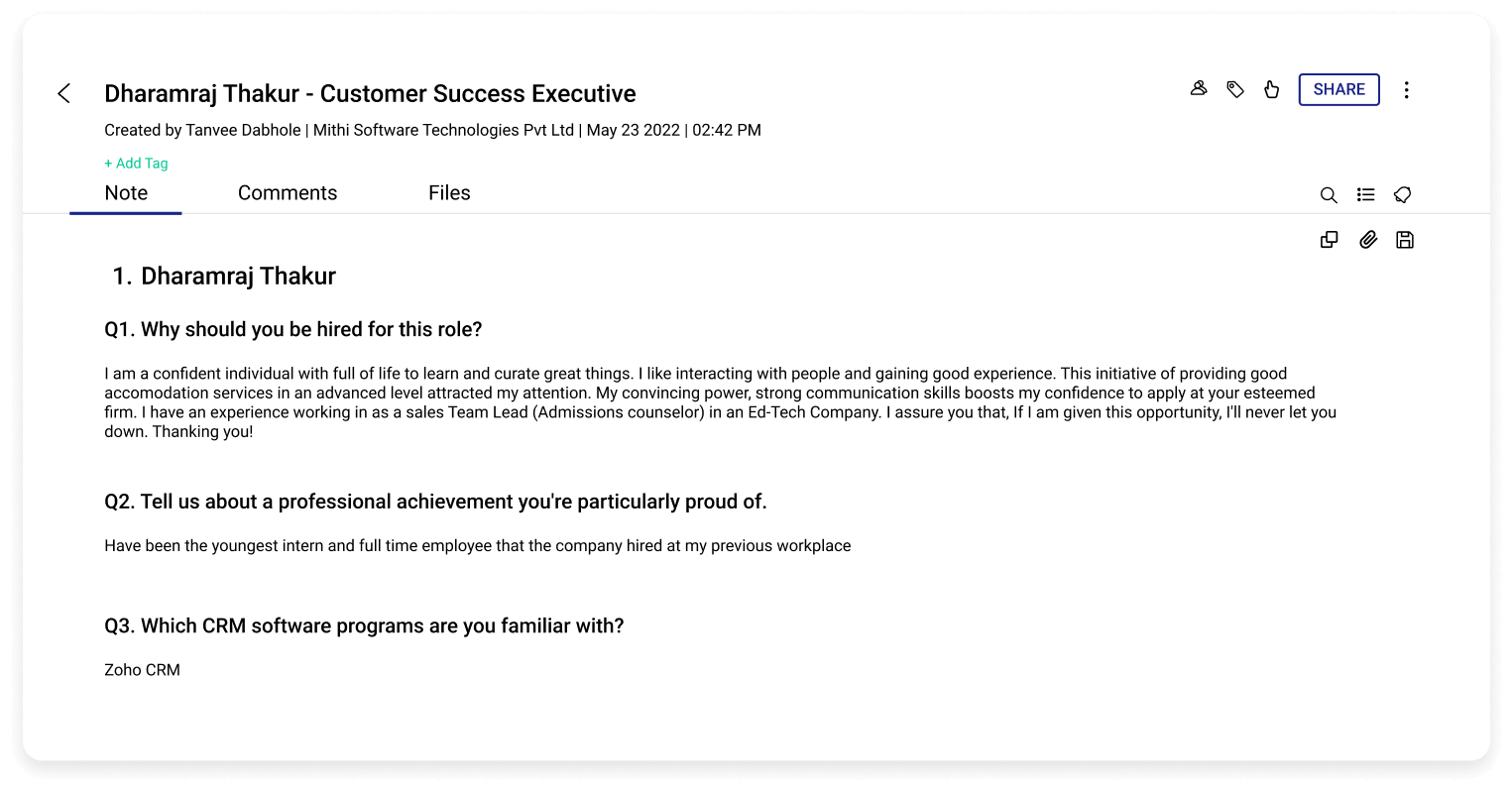
Using Zapier integration, every Google Form submission automatically creates a new Ideolve Note in our Recruitment Workspace.
The note contains:
- Candidate details
- Resume
- Screening responses
- Relevant attachments
The note is automatically shared with HR and the interview panel, ensuring everyone has immediate access to the same information.
Step 3: Collaborative Evaluation
As the candidate progresses through the hiring process, interviewers add their observations directly within the Ideolve Note.
Team members can:
- Mention other stakeholders
- Assign follow-up actions
- Record interview feedback
- Discuss concerns
- Recommend the next steps
Instead of searching through lengthy email threads, every conversation remains attached to the candidate’s profile.
Our End-to-End Recruitment Workflow
1. Hiring Request Approval
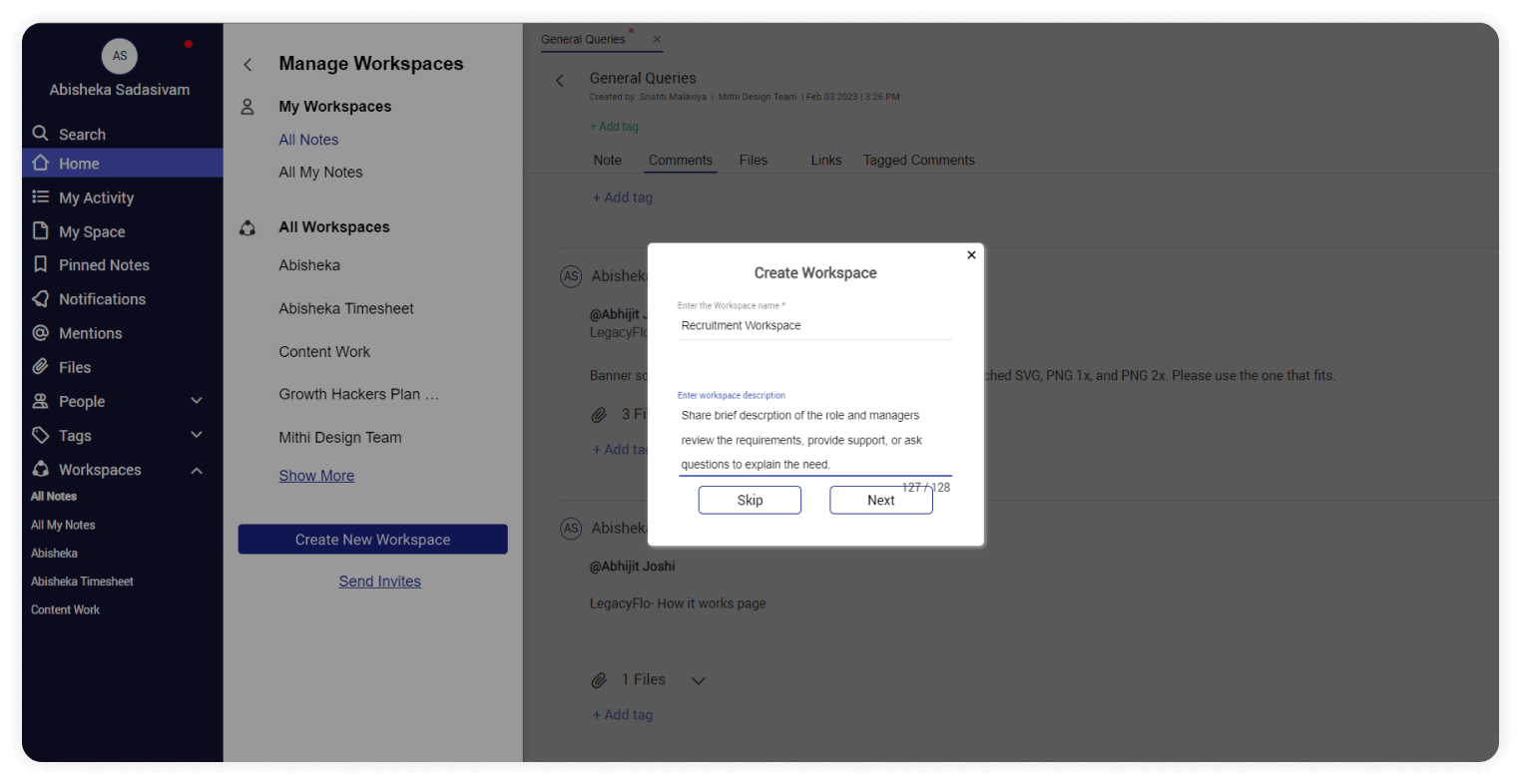
Each department raises hiring requests inside the Recruitment Workspace by creating a new note containing:
- Role description
- Business justification
- Required skills
- Team requirements
Managers review the request, ask questions if necessary, and approve it directly within Ideolve.
Once approved, HR receives a notification to publish the opening on recruitment platforms.
2. Candidate Application Management
Candidates apply through a Google Form.
Zapier automatically transfers every submission into Ideolve, eliminating manual data entry.
The interview panel receives immediate access to the candidate’s profile, ensuring complete transparency from the beginning.
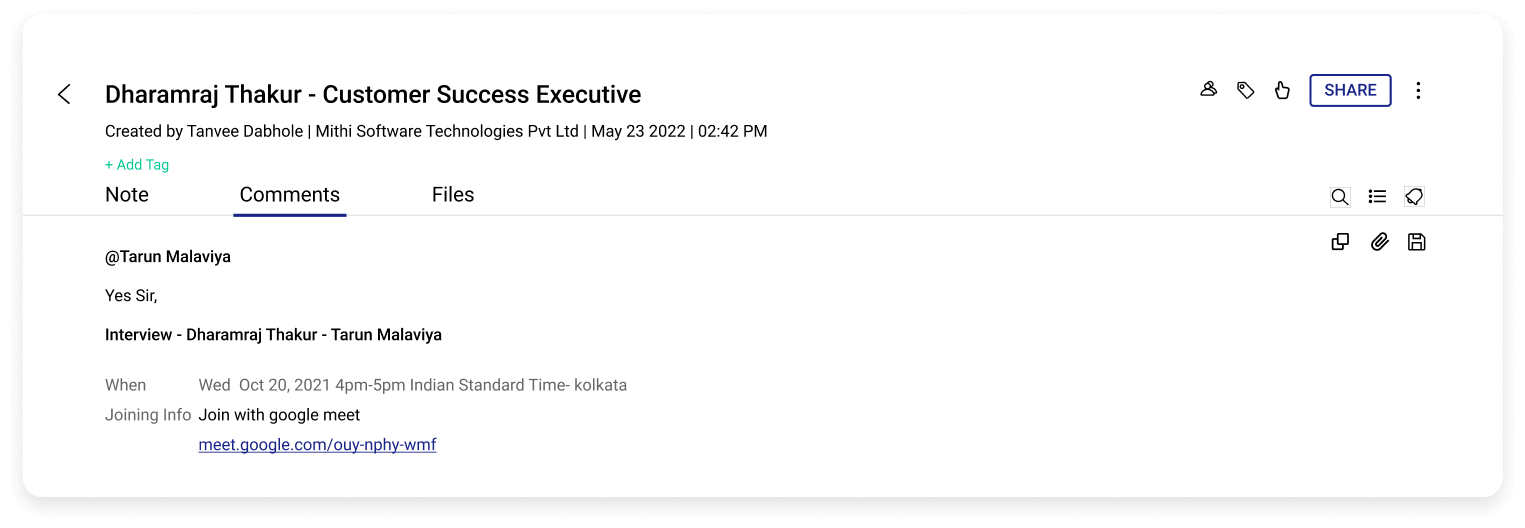
3. Interview Coordination
HR reviews the initial responses and filters candidates who do not meet the required criteria.
For shortlisted candidates:
- Interview schedules are planned
- Meeting links are shared
- Calendar invitations are coordinated
- Interviewers are tagged for upcoming actions
Since all interview information is stored in one place, interviewers always have access to the candidate’s profile, resume, previous feedback, and meeting details.
4. Centralized Interview Feedback
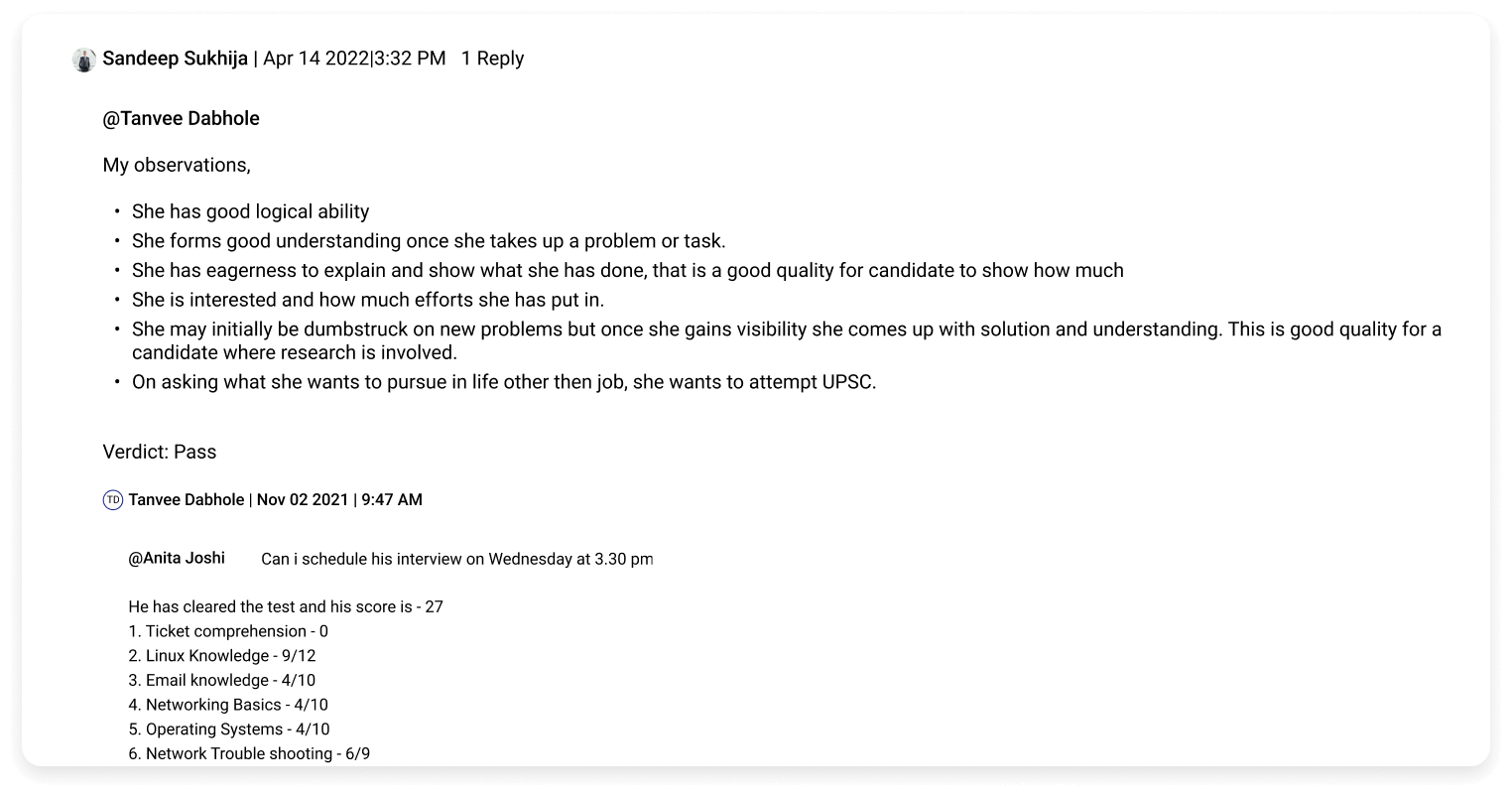
After every interview round, interviewers add structured comments directly within the candidate’s Ideolve Note.
The feedback includes:
- Technical evaluation
- Communication skills
- Cultural fit
- Strengths and concerns
- Recommendation for the next round
Other stakeholders can review existing feedback and contribute their own observations before the final decision is made.
5. Track Candidate Progress
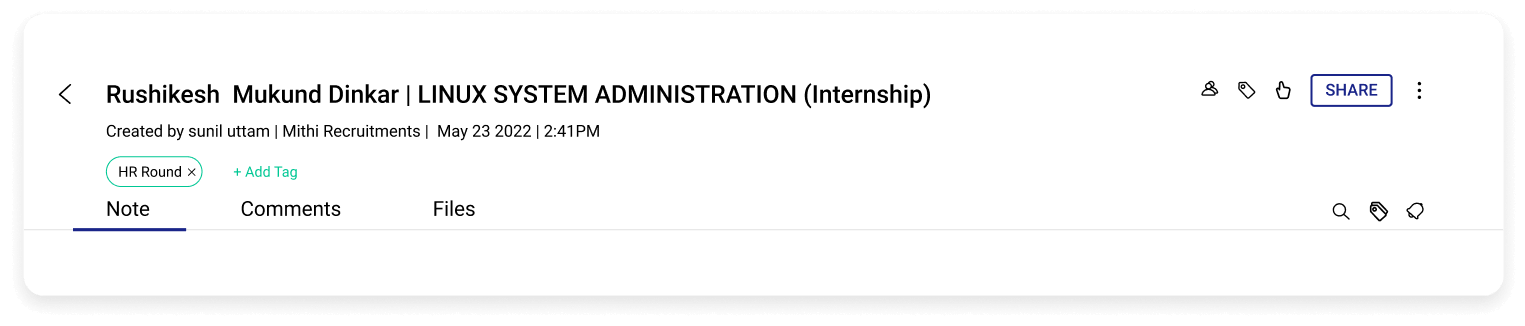
Every candidate’s recruitment status remains visible throughout the hiring journey.
HR can easily track:
- Current interview stage
- Pending actions
- Completed evaluations
- Final hiring recommendation
This eliminates manual follow-ups and keeps everyone aligned.
6. Offer Letter Preparation
Once a candidate successfully clears all interview rounds, HR prepares the draft offer letter and attaches it to the candidate’s Ideolve Note.
Managers and stakeholders review the draft, suggest changes through comments, and finalize the offer collaboratively.
The complete hiring history remains available for future reference and audits.
Results We Achieved
Improved Scalability
Ideolve enabled us to handle a larger number of applications without increasing administrative overhead.
Our recruitment process now scales smoothly as hiring requirements grow.
Faster Hiring Decisions
With all candidate information, interview feedback, and discussions available in one place, decision-making has become significantly faster.
Interviewers no longer wait for follow-up emails or status updates before moving candidates to the next stage.
Better Collaboration and Transparency
HR, hiring managers, and interviewers work from a single source of truth.
Every discussion, recommendation, and decision is documented, ensuring that all viewpoints are considered before making a hiring decision.
This collaborative approach also helps reduce bias and promotes objective evaluations.
Complete Recruitment Documentation
Every stage of the recruitment process is recorded as it happens.
Instead of relying on memory or post-interview summaries, we maintain a comprehensive audit trail that includes:
- Hiring requests
- Candidate information
- Interview schedules
- Feedback
- Decisions
- Offer letters
This documentation improves accountability and makes it easy to review past hiring decisions whenever needed.
Conclusion
Growing organizations need recruitment processes that are structured, collaborative, and scalable.
By moving our hiring workflow into Ideolve, we eliminated fragmented communication, centralized every candidate interaction, and significantly improved collaboration across HR and hiring teams.
The result is a faster, more transparent recruitment process with complete documentation and better hiring decisions.
If your recruitment process still depends on spreadsheets, email threads, and manual follow-ups, a collaborative workflow platform like Ideolve can help transform the way your teams hire.