

The challenge: disconnected support and expert teams
Our frontline support agents manage customer requests through Freshdesk, helping users resolve product and service-related issues. While many requests can be handled directly by the support team, more complex cases often require input from technical experts, developers, or product specialists.
Traditionally, escalating these issues meant taking conversations outside the support platform through emails, chat applications, or verbal discussions. This created several operational challenges:
- Important information became scattered across multiple communication channels.
- Experts lacked complete context about the customer issue.
- Support agents spent time repeatedly explaining the same problem.
- Valuable technical knowledge was difficult to preserve and reuse.
- Scaling support operations became increasingly challenging.
As support requests increased, the need for a more structured and collaborative approach became clear.
Building a collaborative support workflow
To improve collaboration and visibility, we integrated Freshdesk with Ideolve, creating a seamless connection between customer support and internal experts.
Instead of moving discussions across multiple tools, support agents and experts could collaborate around a shared workspace containing the complete history of a customer issue.
This approach ensured that everyone involved had access to the same information, helping teams work together more effectively and respond faster.
A 7-step collaborative ticket resolution process
1. Customer raises a support request
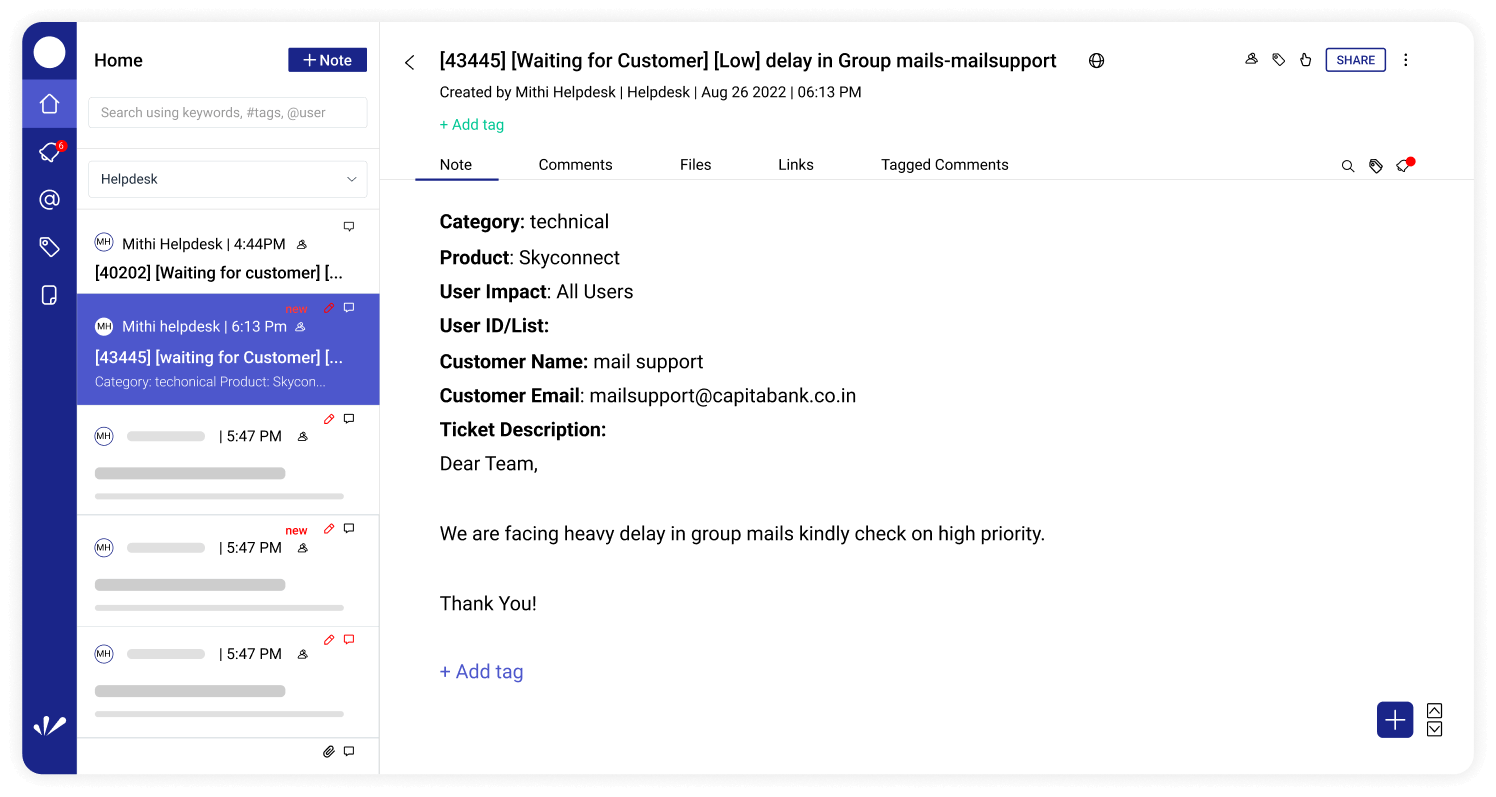
The process begins when a customer submits a support request through the customer portal. A ticket is automatically created within Freshdesk and assigned to the appropriate support team.
2. Ticket information is synchronized automatically
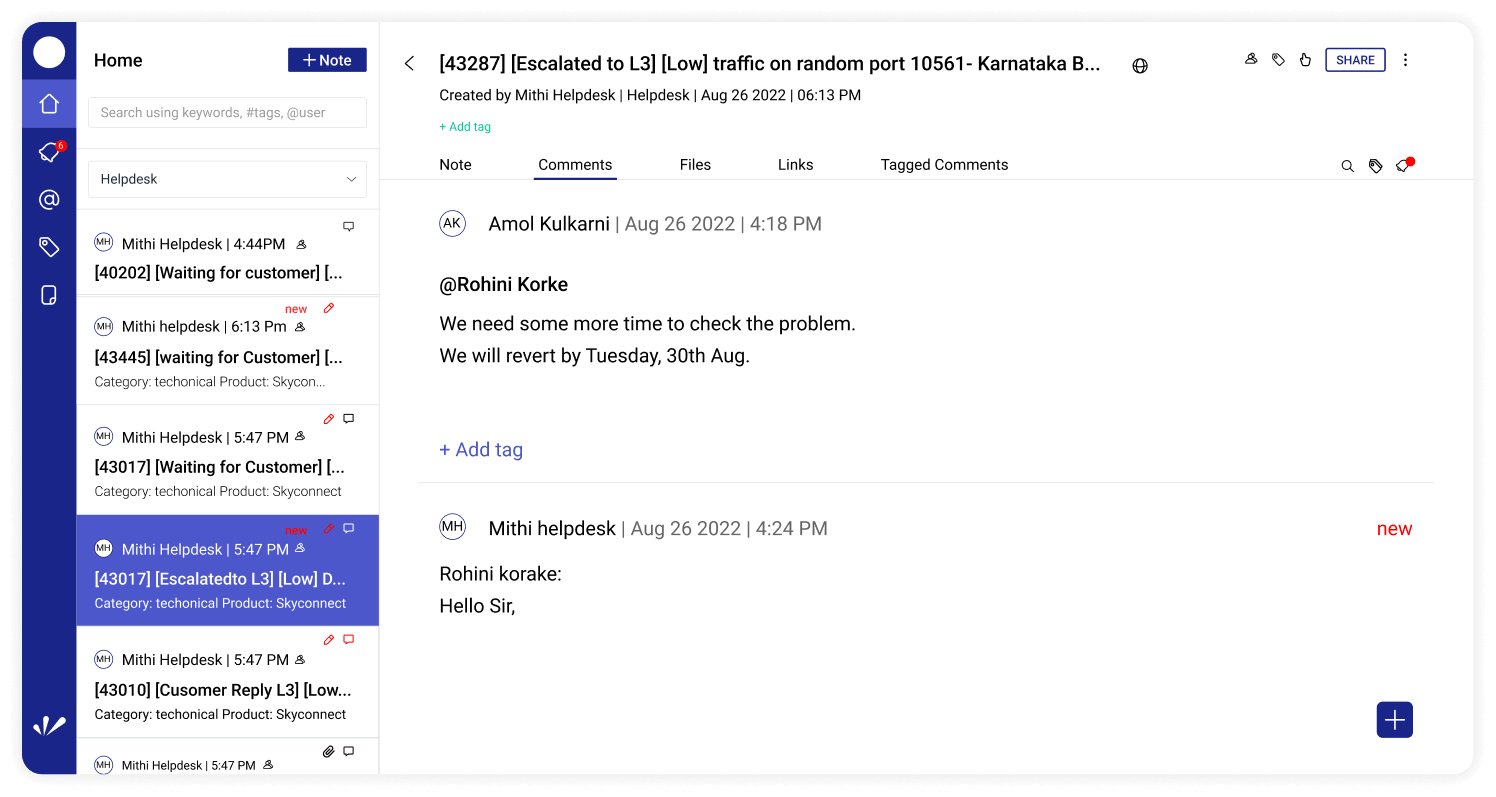
Using integration and automation, the ticket details are captured within Ideolve, creating a dedicated collaborative workspace associated with the customer issue.
3. Conversations build context in real time
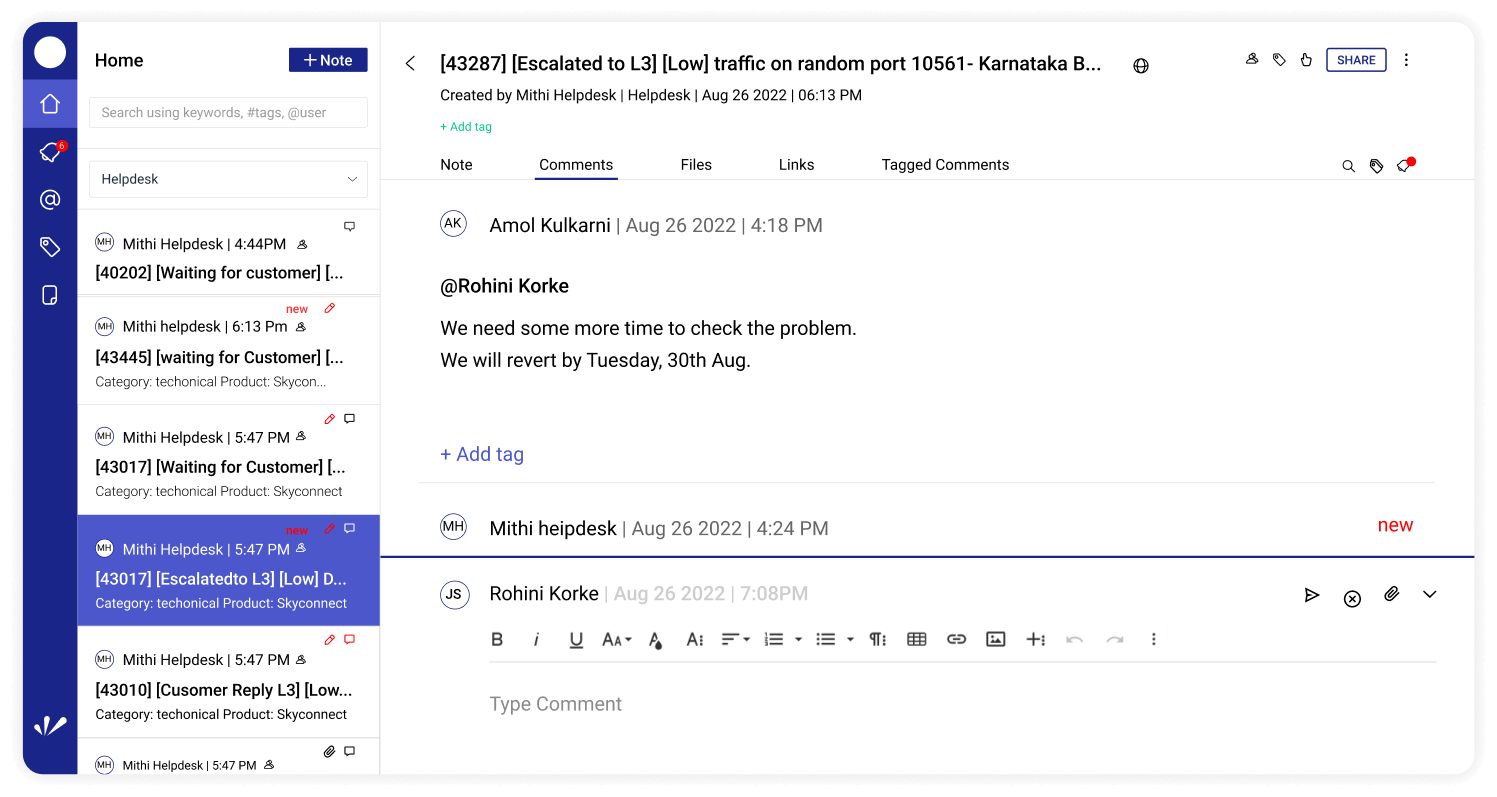
As support agents communicate with the customer, updates and discussions are synchronized, creating a complete history of the issue. This ensures that important context is preserved from the beginning.
4. Issues are escalated to internal experts
When additional expertise is required, support agents can escalate the issue to the appropriate specialists. Instead of manually sharing information, the complete conversation history and supporting context are already available.
5. Experts collaborate within a shared workspace
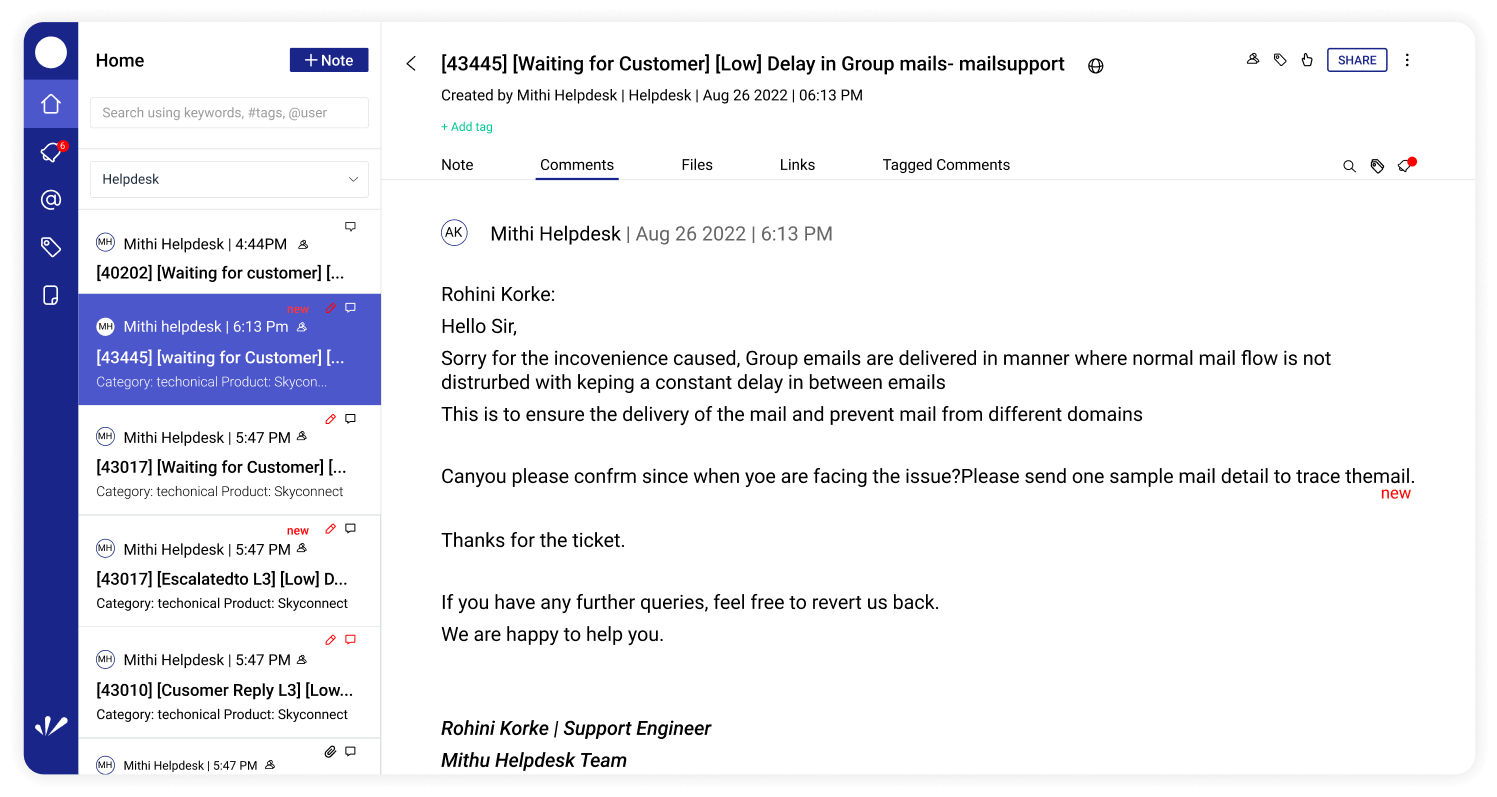
Technical experts review the issue, share recommendations, upload supporting files, and provide guidance directly within the collaborative workspace. Discussions remain connected to the original issue, eliminating communication silos.
6. Support teams deliver faster resolutions
With immediate access to expert insights, support agents can respond more accurately and efficiently, helping customers reach a resolution faster.
7. Knowledge is preserved for future use
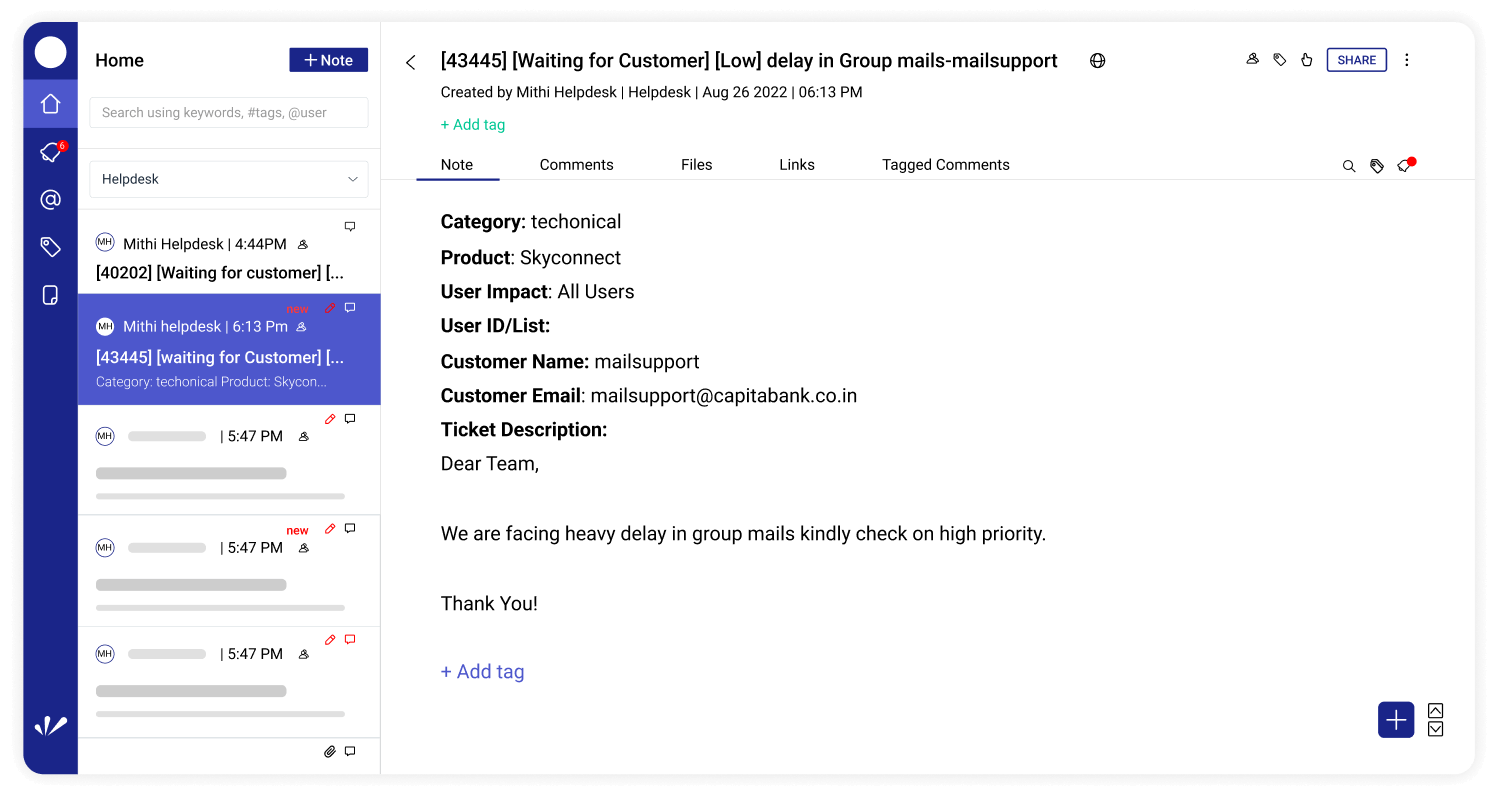
Once the issue is resolved, the complete discussion history becomes part of the organization’s knowledge repository. Teams can categorize, search, and reuse previous resolutions to improve future support outcomes.
How Ideolve strengthens customer support operations
Ideolve acts as a collaborative layer between customer-facing support teams and internal experts. Instead of relying on disconnected communication channels, organizations can centralize discussions, decisions, files, and updates within a single workspace.
This helps teams:
- Improve visibility across support workflows
- Eliminate information silos
- Accelerate issue resolution
- Reduce dependency on email-based collaboration
- Preserve organizational knowledge
- Improve coordination between support and technical teams
By creating a shared environment for problem-solving, Ideolve enables organizations to deliver more consistent and efficient customer support experiences.
The business benefits of collaborative problem-solving
Organizations that connect customer support workflows with collaborative workspaces often experience measurable improvements across operations and customer service.
Faster resolution times
Experts receive complete issue context immediately, reducing delays caused by information gathering and repeated explanations.
Better customer experiences
Customers receive faster, more accurate responses, leading to higher satisfaction and stronger trust.
Improved team productivity
Support agents and experts spend less time coordinating across multiple tools and more time solving problems.
Reduced communication overhead
Centralized collaboration significantly reduces internal email traffic and communication fragmentation.
Stronger knowledge management
Resolved issues become valuable knowledge assets that can be reused to improve future support efficiency.
Continuous product improvement
Customer feedback, technical investigations, and recurring issues become easier to analyze, helping teams improve products, documentation, and processes.
Turning customer support into a competitive advantage
Modern customer support requires more than ticket management. Organizations need the ability to connect people, information, and expertise quickly and efficiently.
By combining customer support workflows with collaborative problem-solving, businesses can eliminate communication silos, accelerate issue resolution, and create better customer experiences.
Ideolve helps organizations transform customer support from a reactive process into a structured, knowledge-driven operation that improves productivity, strengthens collaboration, and drives continuous improvement.