

As digital transformation accelerates and regulatory landscapes evolve, enterprise data management is entering a new era of complexity and accountability. Vaultastic has identified ten critical trends that will reshape how organisations govern, protect, and optimise their data assets in 2026. These predictions reflect the convergence of regulatory pressure, technological advancement, and economic necessity—creating both challenges and opportunities for IT, compliance, and data governance leaders.
From data sovereignty mandates to AI governance frameworks, from cyber-resilience requirements to cloud-native architectures, these trends represent fundamental shifts in how enterprises must approach data management. Understanding and preparing for these changes is no longer optional—it’s essential for organisational resilience, regulatory compliance, and competitive advantage in an increasingly data-driven world.
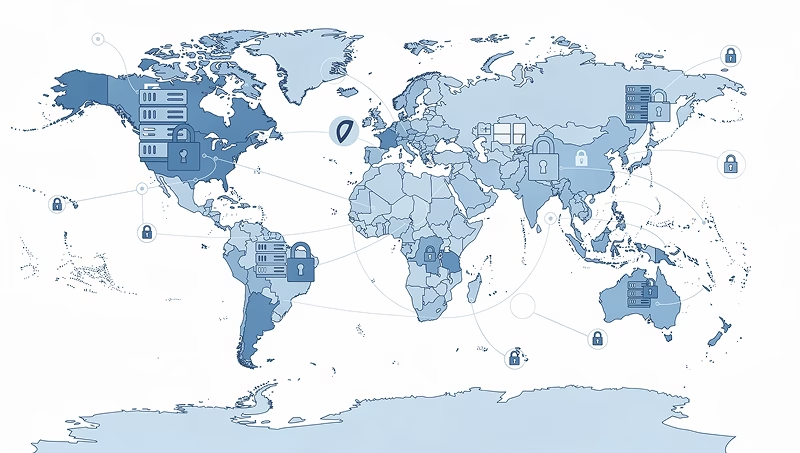
For years, data residency was treated as a checkbox in vendor contracts.
That changes completely from 2025 onward.
With the EU Data Act effective September 2025 and India’s DPDP Act moving into enforcement, regulators are no longer asking whether you have a policy – they’re asking where the data physically sits today and how you prove it.
This applies not just to live SaaS data, but also:
- Archives
- Backups
- Former employee data
- Logs
- DR replicas
From an IT standpoint, the shift is from trusting vendor statements to producing auditable evidence.
Independent, region-locked archives – like the architectural model Vaultastic follows – become a practical way to separate compliance from SaaS platform constraints.
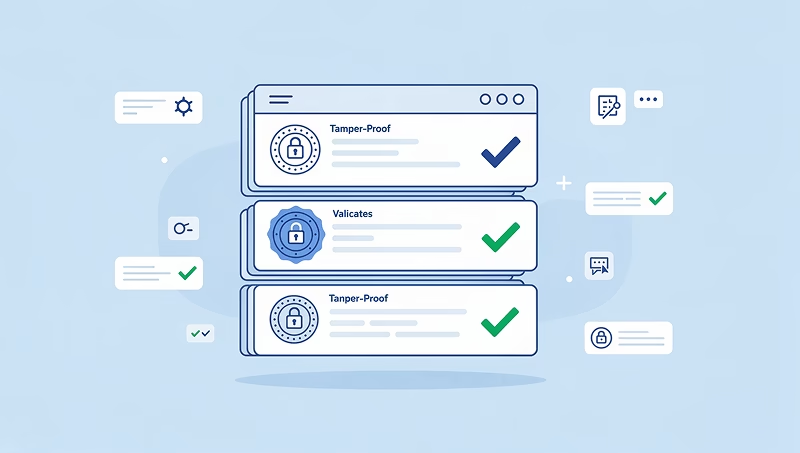
Regulators no longer accept “we had backups” as proof.
They want to know:
- Was data altered?
- Who accessed it?
- Can you prove chain-of-custody?
SEC Rule 17a-4 now explicitly allows an audit-trail alternative to classic WORM, signalling a broader shift:immutability alone isn’t enough — visibility matters.
Most mature programs now blend:
Object-level immutability
Detailed access and change logs
Vaultastic fits this pattern by combining tamper-resistant storage with full audit trails, without locking organizations into inflexible retention models.
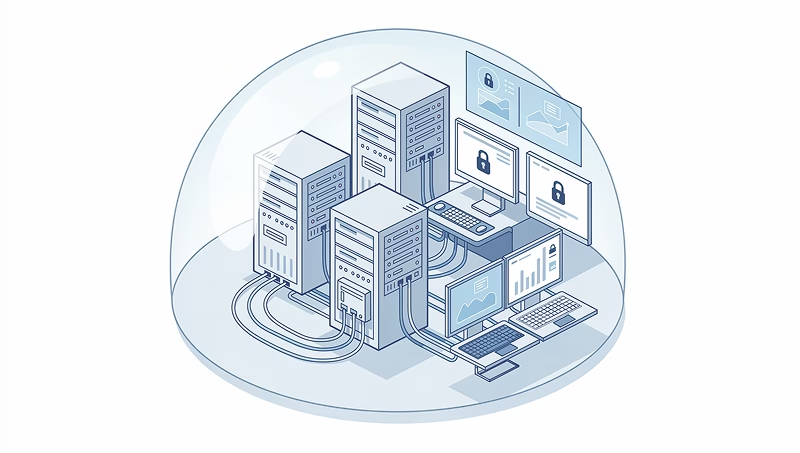
Cyber regulations now explicitly define logs and incident data as records.
Examples:
- CERT-In: 180-day log retention, in-country
- DORA: ICT risk evidence and incident artifacts
- NIS2: auditable response timelines
This expands archive scope beyond email and files into:
- Security logs
- Access records
- Incident response evidence
Long-term, searchable, tamper-evident archives become part of cyber resilience – not just SIEM tooling.
Vaultastic’s role here is as a durable, searchable evidence store that sits outside volatile operational systems.
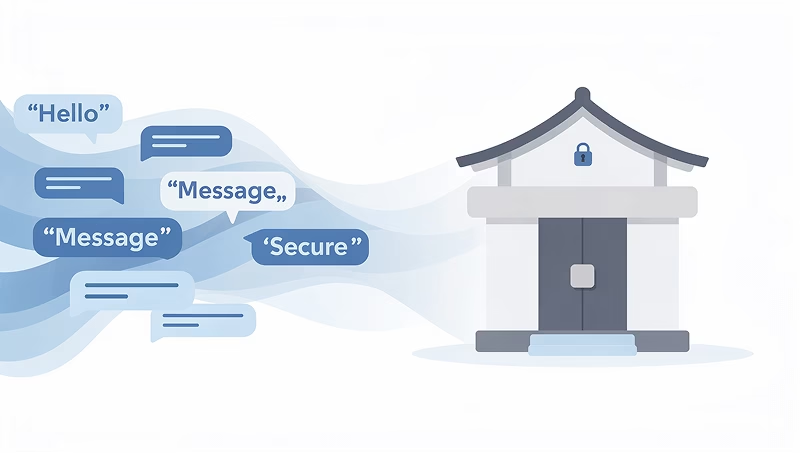
Email is no longer the primary compliance risk.
Enforcement actions make it clear:if business communication happens on a channel, it’s in scope.
This includes:
- Teams
- Slack
- SMS
- Voice
IT teams must think beyond storage and address:
- Context
- Review workflows
- Auditability
Cross-platform archival — the model Vaultastic follows — helps consolidate supervision without forcing users to change how they work.
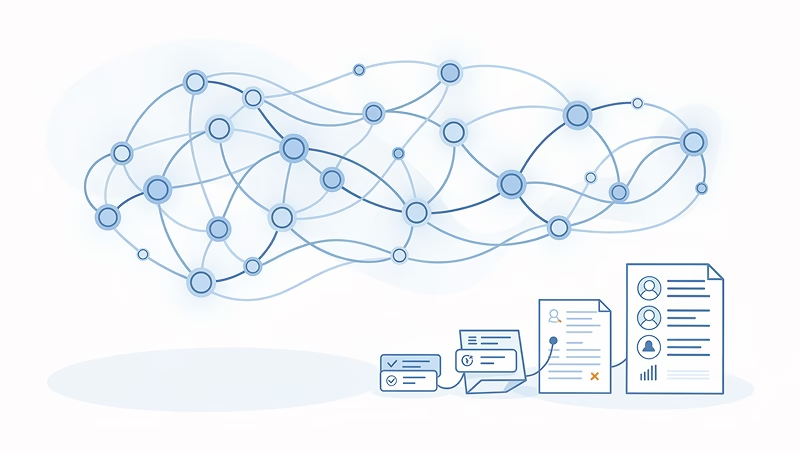
AI introduces an entirely new record class:
- Training data
- Prompts
- Outputs
- Decisions
Auditors will ask:
- What data trained this?
- Can you reproduce a decision?
These are archival problems, not just AI problems.
Vaultastic’s metadata-rich archival and discovery approach is well suited to managing AI-generated records alongside traditional enterprise data.
Exploding data volumes and cloud costs force IT teams to apply lifecycle management, tiering, and cost optimisation to archival data.
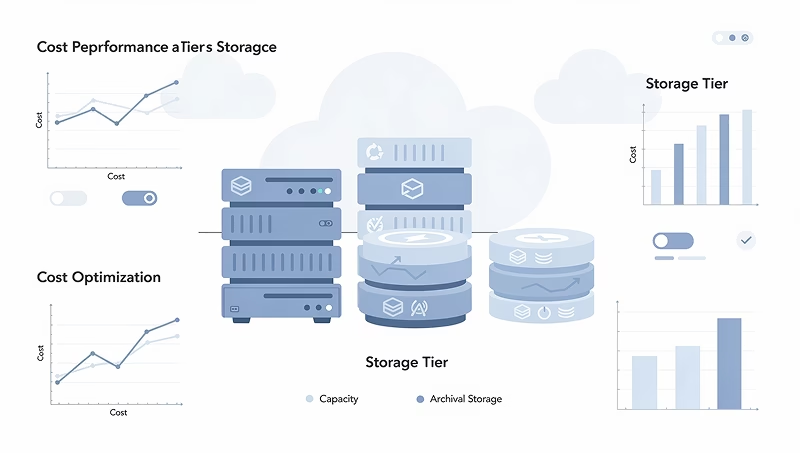
Keeping everything hot forever is financially unsustainable.
Modern archives must:
- Tier data automatically
- Deduplicate globally
- Optimize storage based on access
Vaultastic case studies consistently show 60–70% cost reductions by treating archives as lifecycle-managed assets — not static storage.
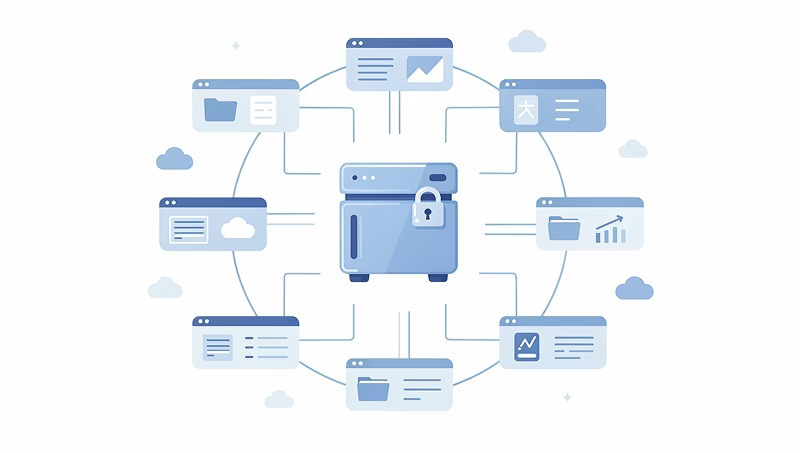
Native SaaS retention tools help, but independent archives are increasingly required for resilience, scale, and cross-platform governance.
Native retention tools help — but they:
- Live in the same control plane
- Share the same outages
- Are expensive at scale
Independent archives create resilience and audit separation.
Auditors now expect visibility into who accessed data, how it changed, and how it moved across systems, regions, and platforms.
Audits now examine lineage, not just retention.
Centralized archives with audit logs simplify this dramatically.
Elastic, cloud-native archives outperform on-prem systems on cost efficiency, durability, availability, and recovery readiness.
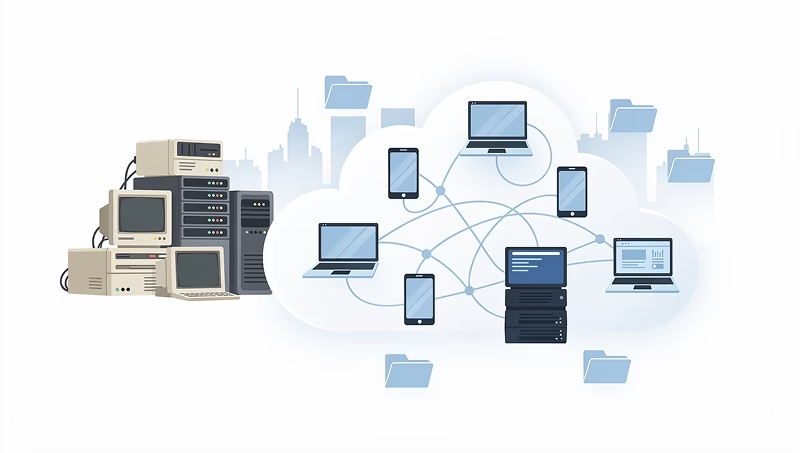
Elastic, cloud-native archives outperform on-prem systems on cost efficiency, durability, availability, and recovery readiness.
On-prem archives struggle with scale, DR, and cost predictability.
Cloud-native archival – like Vaultastic’s architecture – aligns better with modern resilience requirements.
If there’s one takeaway:
Archiving is no longer about storage — it’s about resilience, evidence, and control.
The organizations that get this right will spend less time reacting to audits and more time enabling the business.
Preparing for the Future of Data Management
As digital transformation accelerates and regulatory landscapes evolve, enterprise data management is entering a new era of complexity and accountability. Vaultastic has identified ten critical trends that will reshape how organisations govern, protect, and optimise their data assets in 2026. These predictions reflect the convergence of regulatory pressure, technological advancement, and economic necessity—creating both challenges and opportunities for IT, compliance, and data governance leaders.
From data sovereignty mandates to AI governance frameworks, from cyber-resilience requirements to cloud-native architectures, these trends represent fundamental shifts in how enterprises must approach data management. Understanding and preparing for these changes is no longer optional—it’s essential for organisational resilience, regulatory compliance, and competitive advantage in an increasingly data-driven world.